
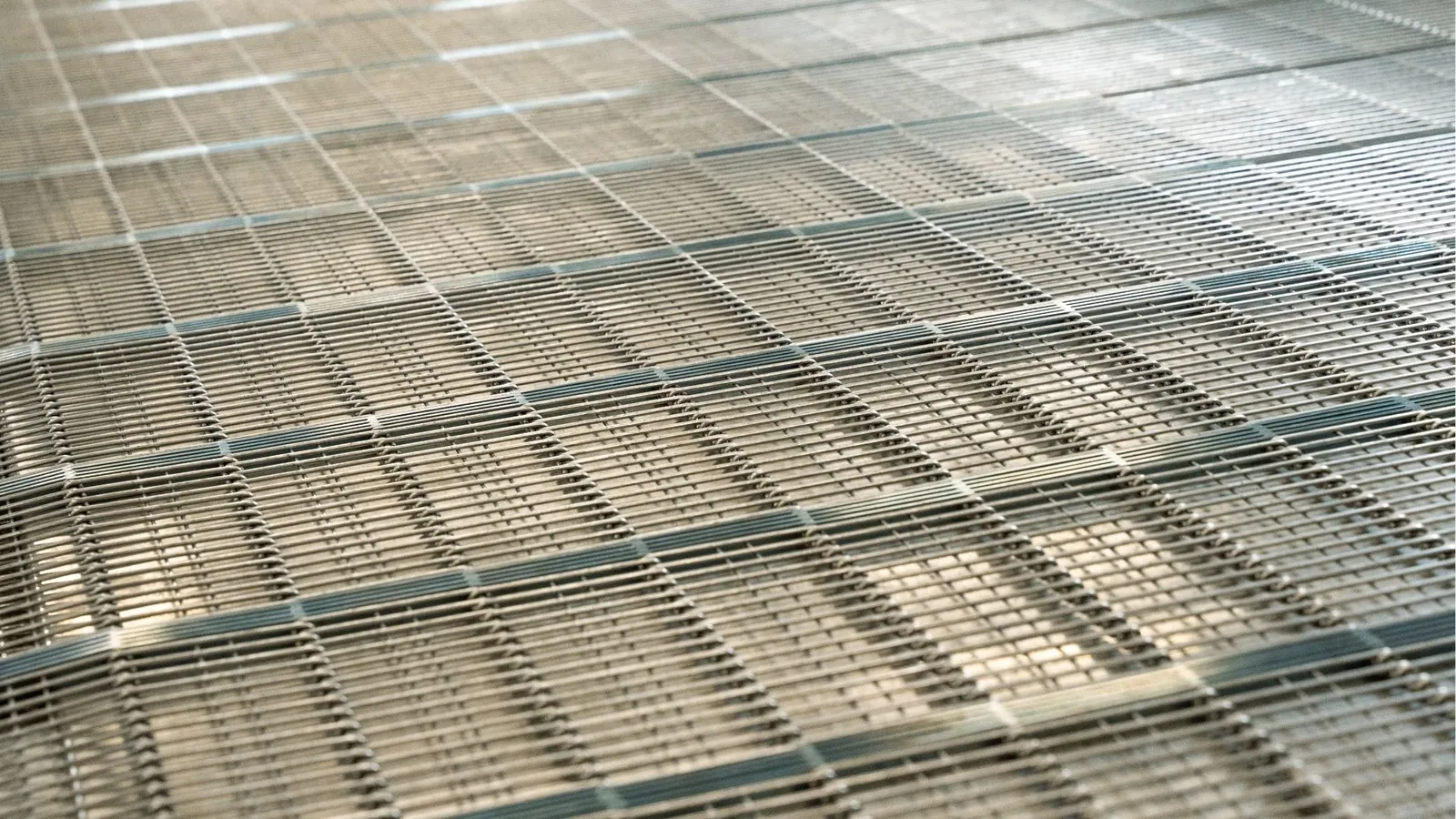
 Photo: Tribelt
Eyelink belts: production, application and expertise
Ask Tribelt about eyelink belts on tribelt.nlWhy the belt choice matters
In industrial processing, a conveyor belt is part of the production process itself, not just a way to move things from A to B. Whether the line bakes bread or moves engine parts, picking the right belt affects output, product quality and maintenance costs. Eyelink belts are one of the most widely used options because they are strong, track accurately and fit many applications. This guide explains how they work, drawing on Tribelt's experience as a manufacturer in Haaksbergen, the Netherlands.
How an eyelink belt is built
An eyelink belt is a metal conveyor belt made of wire eyes (loops) placed close together and joined by crossrods and links into a flat, stable surface. That construction delivers four properties:
- High load capacity: heavy products are carried without the belt deforming.
- Accurate tracking: the belt stays aligned, so products flow smoothly.
- Good airflow: the open mesh lets air and heat through, which matters for baking, drying and washing food.
- Long life: the metal resists wear, corrosion and extreme temperatures.
Benefits over woven belts
Compared with a traditional woven mesh, an eyelink belt is stiffer and bends or stretches less under heavy loads. It can be driven positively by sprockets, which keeps products exactly where they should be. Its open structure lets air circulate and liquids drain, and it is simple to clean, a major point in food production. Made from stainless steel or other durable metals, the belt needs little maintenance and keeps downtime and costs low.
Where eyelink belts are used
- Food industry: bread and pastry, potatoes, meat and vegetables. Heat resistance and easy cleaning make the belt a good fit for cooling, drying, baking and frying.
- Automotive and heavy industry: carrying metal parts and components through production, including through heat and under heavy load.
- Packaging and logistics: moving packed goods smoothly while keeping them from shifting.
- Heat treatment and chemical processing: the open mesh spreads heat or process chemicals evenly over the product.
Tribelt eyelink variants
Tribelt's eyelink range is built around a handful of types, each with its own purpose:
- Type 1000 (KE): for lines that need a chain drive.
- Type 1100: the standard eyelink belt for most applications.
- Type 1110: a newer version with flattened eyes for even smaller openings.
- Type 1150: a version without a locating wire.
The locating wire is the wire that supports the belt, holds the eyes in place and sets the distance between them.
To get the most from an eyelink belt, Tribelt also supplies matching drive elements, such as a drive wheel (Type 1100T, for OGB-L), which meshes accurately with the belt, and a cage drum (Type 1100K, for OGB-L), which guides the belt and limits wear. The current eyelink types and specifications are listed on the eyelink belts product page.
Choosing an eyelink belt
Eyelink belts have become a standard answer wherever precision, reliability and long service life count. Their sturdy build, good heat conduction and hygienic design make many processes more efficient. Tribelt can help compare eyelink belts with other conveyor types or advise on maintenance of an existing belt.
Advice or a quote?
Quotes and advice go through Tribelt's official website.