
 Photo: Tribelt
Conveyor belt drive components
Drive elements
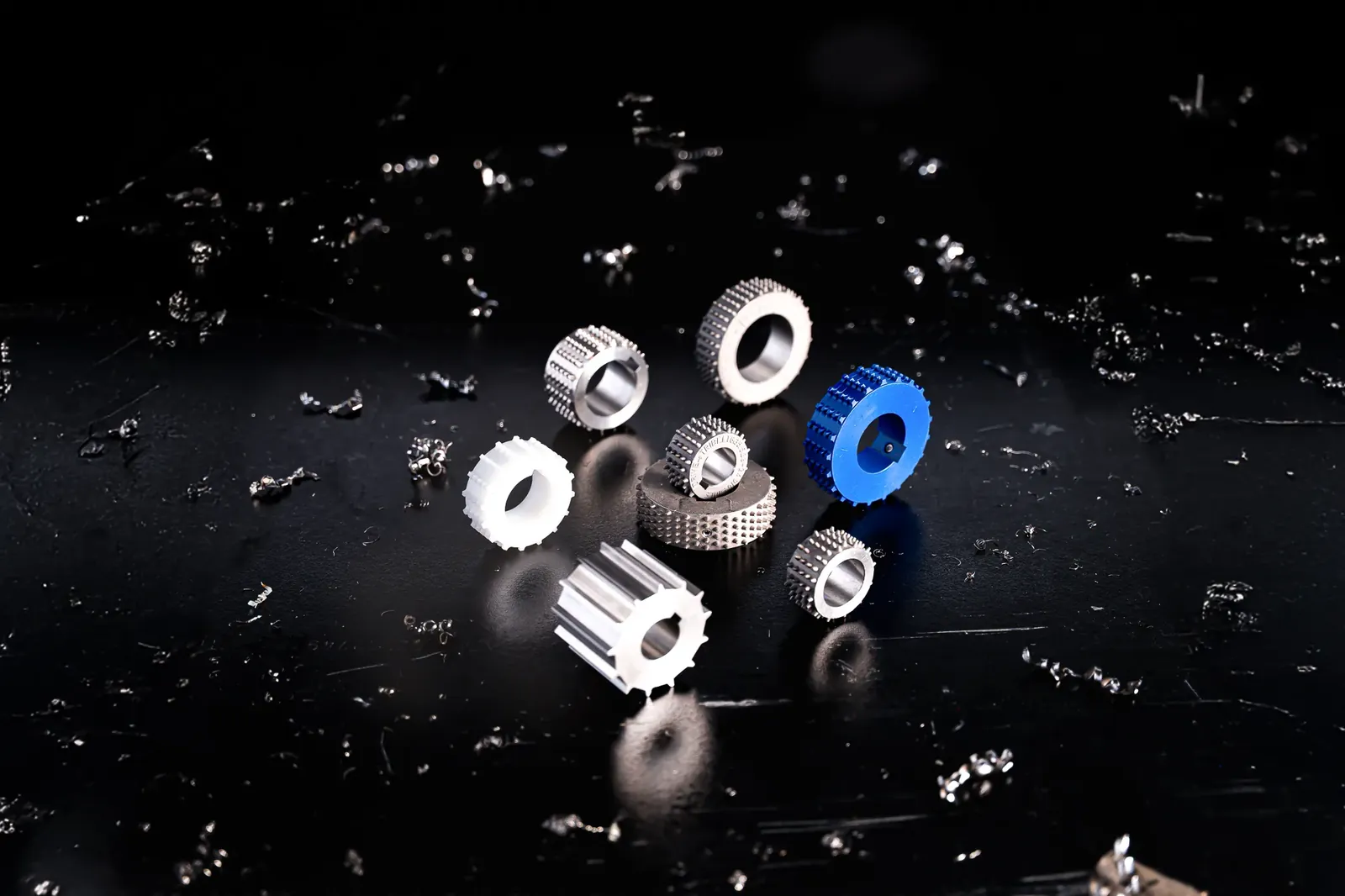
Tribelt machines its own sprockets, tube drums and cage drums for eyelink, spiral and Tri-Flex belts: slip-free drive in stainless steel, C45 or plastics.
Ask for a drive element quote on tribelt.nlDrive elements made for the belt
A metal conveyor belt is only as reliable as the part that pulls it. Tribelt, the Dutch conveyor belt manufacturer in Haaksbergen, machines all of its sprockets and drums in-house. That lets it match every drive element to one specific belt and application, and deliver quickly. A sprocket turns the shaft's rotation into belt movement through a positive, tooth-to-belt connection, so the belt moves at a constant, accurate speed without slipping.
Drives per belt type
Eyelink belts (OGB-L and OGB) can be driven in three ways:
- Tube drums: solid drums with milled teeth. Hygienic, very stiff and fit for heavy loads.
- Cage drums: an open frame of welded discs and bars for heavily loaded lines. The open build lets crumbs and liquid fall through, which gives a self-cleaning effect in wet or dirty areas.
- Drive wheels: sprockets with a special tooth profile for efficient, slip-free power transfer, mostly on lighter lines.
Open spiral belts (balanced weave) run on friction rollers or on sprockets. The ClearTrac belt has sprockets whose teeth engage the belt directly, preventing slip and keeping the belt straight even on long or wide conveyors. These sprockets come in POM or stainless steel with bore, keyway and locking to suit.
Tri-Flex belts use drum friction plus custom sprockets with the correct width and tooth count, so the belt keeps its grip through curves in spiral towers.
Which drive for which job
- Eyelink belts: drive wheels for lighter work such as baking ovens, cooling and freezing tunnels, dryers and washers; cage or tube drums for heavy industrial ovens.
- Spiral belts: sprocket drives wherever the belt must track straight and slip is unacceptable.
- Tri-Flex: sprockets together with drums, with drum and sprocket speeds carefully matched.
Options by belt type
| Belt | Material | Other choices |
|---|---|---|
| Eyelink | Plastic (light, wear resistant) or steel / stainless steel | Tooth count to suit belt pitch; keyway plus optional set screw; single or double disc |
| Open spiral | Mostly stainless steel for heat and cleaning; plastic for light duty | Tooth profile shaped to the spiral; custom bore and hub; smooth or hardened finish |
| Tri-Flex | Stainless steel or engineering plastic | Tooth shape that follows the belt through bends; idler wheels without keyway; hub for drive or idler use |
For every belt type, Tribelt can also set diameter and tooth count to the installation, machine parts precisely for low wear, add extra locking (key, tapped hole, locking screw) and work from a customer drawing.
Sprockets, tube drums and cage drums compared
- ClearTrac sprocket: teeth engage the belt directly. Positive drive, compact, ideal for small machines or precise positioning. Used with open spiral belts.
- Tube drum: a closed cylinder that drives by friction. Simple and robust, handles heavy continuous loads and is easy to clean. Common on eyelink belts and heavy conveyors.
- Cage drum: a drum of bars that grips better than a tube drum, lets debris and fluids pass and suits damp or dirty environments such as bakeries and meat or fish plants.
Because Tribelt makes these parts itself, it can adapt each one to the belt, material, size and load. The result is short lead times, a smooth hygienic drive and a longer belt life. Browse the belts that go with these drives on the metal conveyor belts overview.
Specifications
| Drive types | tube drum, cage drum, drive wheel (sprocket), ClearTrac sprocket, friction roller |
|---|---|
| Tri-Flex sprocket teeth (recommended) | 12–24 |
| Tri-Flex sprocket width (typical) | 45–55 mm |
| Shaft fixing | bore, keyway, tapped hole, set screw |
| Compatible belts | eyelink, open spiral, closed spiral, Tri-Flex, other types |
Materials
- AISI 303 stainless steel
- AISI 316L stainless steel
- C45K steel
- POM
- PA6G
- PE1000
Frequently asked questions
Why buy drive elements from Tribelt?
Tribelt makes its drive elements for metal conveyor belts in its own workshop, so each part is sized to the belt it drives. A good fit prevents slip, raises efficiency and makes both the belt and the drive last longer.
Which materials are used for sprockets and drums?
Stainless steel (AISI 303 and AISI 316L), steel C45K and plastics such as POM, PA6G and PE1000. The choice depends on the load, the hygiene requirements and the application.
How does the right drive extend belt life?
A positive drive stops the belt from slipping, keeps it correctly positioned and cuts wear. Combined with sturdy materials, that noticeably lengthens the life of both belt and drive.
Where are Tribelt drives used?
In food and heavy industry around the world: ovens and fryers, cooling and freezing tunnels, dryers, and sterilisation or pasteurisation tunnels.
Can Tribelt make drives for an existing conveyor?
Yes. Tribelt designs sprockets, drums and gears for eyelink, open spiral, closed spiral, Tri-Flex and other belts, matched to the existing machine for diameter, tooth layout, bore, keyway and mounting.
Advice or a quote?
Quotes and advice go through Tribelt's official website.